
Common Snow Removal Mistakes That Disrupt Commercial Operations
Most winter disruptions at commercial properties aren’t caused by extreme snowfall alone. In our experience, they’re caused by preventable mistakes in planning, execution, and communication.
Our commercial customers often come to us after a difficult winter with a previous provider. The issues they describe are usually the same, missed service, slow response times, poor snow placement, or contractors who weren’t prepared for cumulative snowfall. These mistakes don’t just create inconvenience, they disrupt operations, frustrate tenants, and increase safety risk.
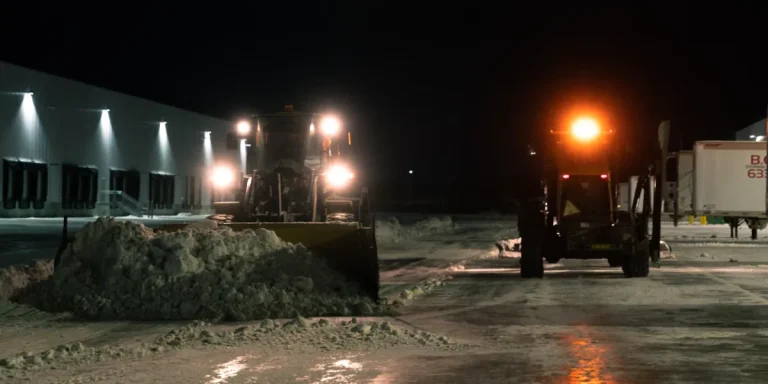
Not Responding Quickly Enough During Active Snowfall
One of the most common mistakes we see is delayed response during snowfall.
Waiting until snow has stopped before servicing a commercial site often leads to access issues. Snow compacts under traffic, lanes narrow quickly, and entrances become difficult to navigate. In our experience, once access is compromised, it takes significantly more time and effort to restore safe conditions.
Commercial sites need active monitoring and response as conditions change, not reactive service after problems appear.
Using Undersized or Incorrect Equipment for the Site
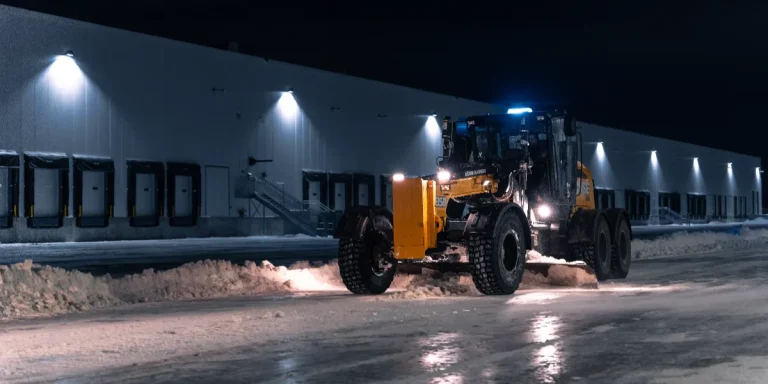
Equipment mismatch is one of the fastest ways snow removal falls behind.
In our experience, problems arise when contractors bring:
-
- Small equipment to large parking lots
- Large equipment into tight or complex areas
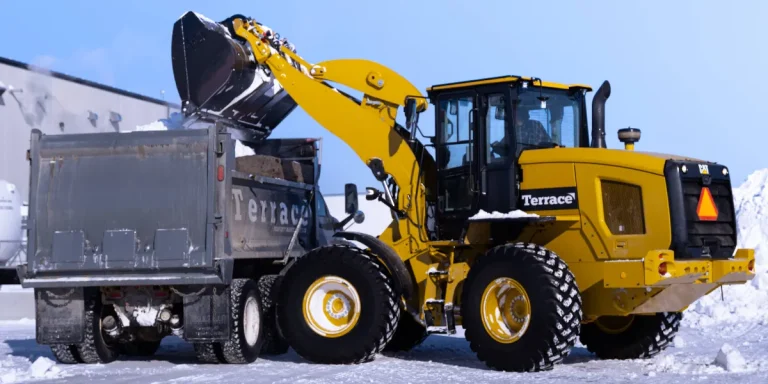
- No loaders when snow volumes increase
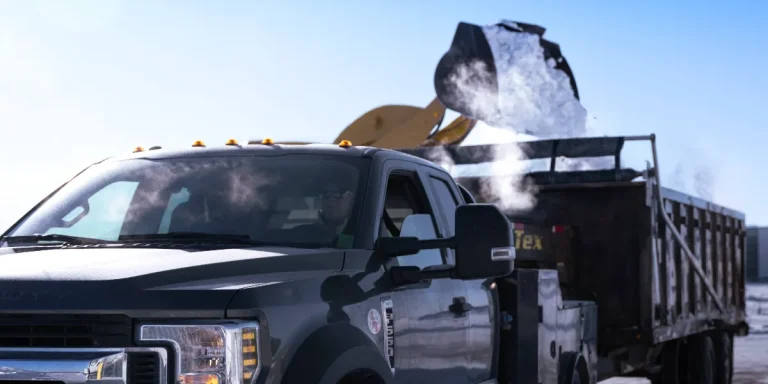
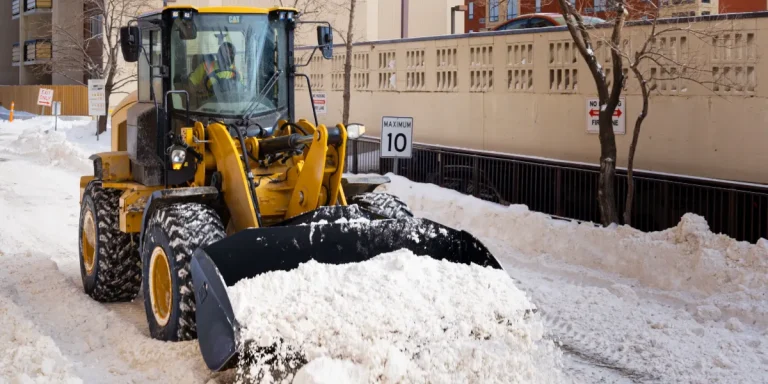
Using the wrong equipment slows service, limits how much snow can be moved, and increases the likelihood of missed areas. Our commercial customers say this often leads to partial clearing, blocked access routes, and the need for repeat visits.
Underestimating Manpower During Heavy or Repeated Snowfall
Snow removal isn’t just about equipment, it’s about staffing depth.
Repeated snowfall stretches crews thin. In our experience, contractors without enough trained operators struggle to keep up, especially during back-to-back storms. This leads to delayed service, skipped properties, or rushed work.
Commercial operations depend on consistency. Understaffed snow removal creates uncertainty during the times reliability matters most.
Choosing the Lowest Price Without Verifying Insurance and Coverage
Price is often a deciding factor, but focusing only on cost creates risk.
Our property management customers often tell us they learned too late that a low-priced contractor lacked proper insurance or adequate coverage. This exposes property owners and managers to liability if incidents occur.
In our experience, the lowest price rarely accounts for proper staffing, equipment, insurance, and planning needed for reliable commercial snow removal.
Poorly Maintained Equipment Leading to Downtime
Equipment failures don’t always happen in clear weather.
In our experience, poorly maintained equipment breaks down during peak demand, often mid-storm. When this happens, service is delayed or missed entirely. Commercial customers usually don’t find out until access issues arise.
Reliable snow removal requires equipment that’s maintained, serviced, and ready before the season begins.
Pushing Snow Into the Wrong Locations
Early-season snow placement decisions often cause mid-season problems.
In our experience, pushing snow into the wrong areas leads to:
-
- Lost parking stalls
- Blocked sightlines
- Narrowed access lanes
- Reduced maneuvering space
Our commercial customers often don’t notice this immediately. The disruption builds gradually until parking availability drops or access becomes unsafe. This issue ties directly into the mid-season snow storage problems many properties face.
Failing to Prioritize Based on Site Conditions and Accumulating Snow
Not all snow events should be handled the same way, especially in a city like Winnipeg.
In our experience, some contractors fail to adjust service priorities as winter progresses. They treat every snowfall the same, regardless of what has already accumulated on the site. This ignores how snow builds up over time and how site conditions change from early winter to mid- and late-season.
What works in early December often doesn’t work by February.
Why static snow plans fail as winter goes on
As snow accumulates, commercial properties experience:
-
- Reduced snow storage capacity
- Larger, harder snow piles due to compaction and freeze-thaw cycles
- Narrower driving lanes and reduced turning space
- Increased pressure on entrances, exits, and pedestrian routes
Continuing with the same priorities, equipment, and service frequency often leads to access and safety issues.
Winnipeg winters that exposed poor mid-season planning
Winnipeg has experienced several winters where cumulative snowfall caused widespread disruption for commercial properties that didn’t adjust their snow management approach:
- 2013–2014 winter
- Approximately 115–120 cm of total snowfall
- Frequent storms over a long period
- Snow piles grew quickly and remained for most of the season
- Properties relying only on piling lost parking space early and struggled with access by mid-winter
- 2021–2022 winter
- Over 130 cm of snowfall, well above average
- Repeated storms with limited melt periods
- Snow storage areas filled faster than expected
- Many commercial sites required unplanned snow hauling just to restore access
In both seasons, the disruption didn’t come from a single extreme storm. It came from accumulation over time. Properties that failed to reassess priorities mid-season often faced:
-
- Blocked sightlines at entrances and exits
- Reduced maneuvering space for service and delivery vehicles
- Snow encroaching into sidewalks and pedestrian areas
- Emergency service calls instead of planned maintenance
How priorities need to change as snow accumulates
In our experience, effective commercial snow removal requires priorities to evolve as conditions change, including:
-
- Shifting focus from piling to preservation of access routes
- Adjusting equipment and manpower as snow volumes increase
- Identifying when hauling needs to be introduced before space runs out
- Reprioritizing areas that become critical later in the season
Our commercial customers often say the biggest issues arose when snow removal continued to follow an early-season checklist that no longer matched site conditions.
Commercial snow removal requires ongoing assessment and adjustment. A plan that works in November may be completely inadequate by February if it isn’t updated to reflect cumulative snowfall. The properties that remain functional through heavy winters are the ones that treat snow management as a dynamic process, not a fixed routine repeated storm after storm.
Not Understanding the Flow of the Site
Every commercial site functions differently.
In our experience, snow removal disrupts operations most when contractors don’t understand:
-
- Traffic patterns
- Delivery schedules
- Pedestrian movement
- Peak usage times
Snow removal should support how a site actually operates. When crews don’t understand site flow, snow gets pushed into high-use areas, entrances become congested, and daily operations slow down.
Waiting Too Long to Address Snow Storage and Hauling
Snow piling works until it doesn’t.
Many commercial properties rely on piling snow early in the season, assuming it will remain manageable. In our experience, snow storage becomes a problem mid-season when piles grow larger, harder, and start encroaching on usable space.
Treating clear-and-haul as an emergency rather than a planned service often leads to disruption. This is why we also discuss the issue in our Learning Center articles on mid-season snow storage and when parking lots require clear-and-haul snow removal.
Not Booking Commercial Snow Services Early Enough
One of the most avoidable mistakes is waiting too long to secure service.
In our experience, commercial customers who delay booking snow removal risk limited availability once winter begins. During major weather events, contractors are focused on existing clients, leaving last-minute requests underserved.
Planning early provides consistency and avoids scrambling during active storms.
Absolutely. Here’s an expanded version that goes a bit deeper, stays human, and clearly explains why this mistake causes real operational problems without sounding preachy.
Treating Snow Removal as a Single Event Instead of a Season-Long Process
Focusing on individual storms often causes commercial properties to miss the bigger picture.
Winnipeg winters aren’t defined by one major snowfall. They’re defined by repeated storms over several months, often with little opportunity for snow to fully melt. In our experience, disruptions happen when snow removal is handled as a reaction to each individual event instead of being managed as a season-long process.
After a single storm, access may seem fine and snow piles may appear manageable. Over time, those piles grow, harden, and begin to encroach on parking areas, driving lanes, loading zones, and walkways. Cumulative snowfall affects access, storage, and safety in ways that aren’t always obvious after one event, but become very noticeable mid-season.
Our commercial customers often tell us that problems didn’t start with one bad storm. They started when small compromises added up over weeks of snowfall. Treating snow removal as an ongoing strategy allows commercial properties to adjust service frequency, manage snow placement more effectively, and plan for hauling before access and safety are impacted.
This approach reduces mid-season disruption and helps keep sites functional throughout the entire winter, not just after the last storm.
How Professional Commercial Snow Removal Avoids These Issues
In our experience, avoiding these mistakes comes down to preparation and planning.
Professional commercial snow removal focuses on:
-
- Reliable response during active snowfall
- Matching equipment and manpower to the site
- Planning snow placement early
- Adjusting strategies as winter progresses
- Understanding how each property operates
This approach supports operations instead of disrupting them.
Commercial Snow Removal Across Winnipeg and Surrounding Areas
We work with commercial properties across Winnipeg and surrounding areas, including:
-
- Winnipeg
- Garden City
- River East
- East St. Paul
- North Kildonan
- East Kildonan
- West Kildonan
- The Maples
- Rossmere
- Transcona
Our experience across these areas gives us insight into how snow removal challenges develop throughout the winter.
Avoiding Disruption Through Better Snow Planning
In our experience, the most disruptive snow removal problems are preventable. Understanding common mistakes helps commercial property owners and managers avoid unnecessary downtime, safety concerns, and frustration during winter.
Terrace Snow Removal works with commercial and industrial properties to plan snow removal strategies that support operations, not disrupt them. Our Learning Center is designed to help property managers make informed decisions throughout the winter season.