How Industrial Sites in Winnipeg Plan for Repeated Snowfall
Winter planning looks very different for industrial sites than it does for smaller commercial properties. In our experience, industrial operators aren’t concerned with how snow looks, they care about whether trucks can move, docks can be accessed, and operations can continue without interruption.
Winnipeg winters bring repeated snowfall over a long season. Snow doesn’t arrive once and melt away, it accumulates storm after storm. Our industrial customers say the problems usually don’t appear after the first snowfall, they appear weeks later when access routes narrow, snow piles harden, and space starts disappearing.
That’s why industrial snow removal is as much about planning as it is about plowing.
Why Repeated Snowfall Creates Unique Challenges for Industrial Sites
In our experience, repeated snowfall creates compounding problems for industrial properties. Snow builds up faster than it can be managed if there isn’t a plan in place.
Unlike smaller lots, industrial sites often include:
-
- Large yards
- Internal roadways
- Shipping and receiving areas
- Multiple access points
When snowfall keeps coming, these areas don’t reset between storms. Snow piles grow, freeze, and spread into operational space. Our industrial customers often tell us this is when efficiency drops and safety concerns increase.
Access Comes First: Keeping Heavy Truck Routes Clear
For industrial sites, access is everything.
Heavy trucks need wide, predictable routes to maneuver safely. In our experience, even small reductions in lane width can cause problems when tractor-trailers are turning, backing, or lining up for docks.
Industrial snow planning focuses heavily on keeping:
-
- Access roads
- Laneways
- Approaches
- Internal roadways
clear and wide enough for large vehicles. Our industrial customers say that when these routes start to narrow due to snow piles, delays and near-misses become more common.
Planning snow placement early helps preserve turning radiuses and keeps truck traffic moving safely throughout the winter.
Shipping Centres and Warehouses: Protecting Loading and Unloading Areas
Warehouses and shipping centres face additional challenges during repeated snowfall.
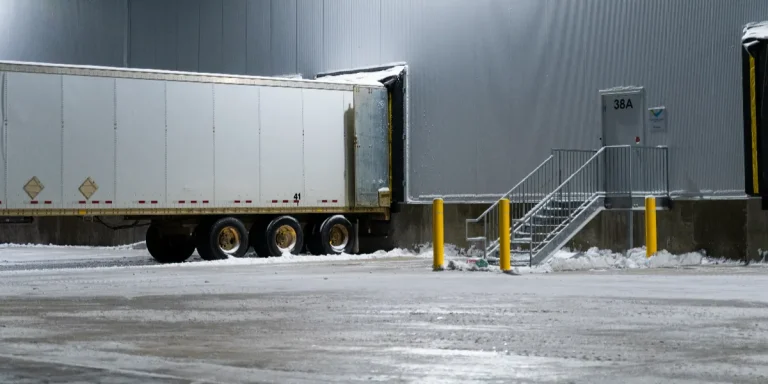
Loading docks and dock approaches need to remain clear not just for trucks, but for safe loading and unloading. In our experience, snow buildup near docks is one of the fastest ways winter conditions disrupt operations.
Our warehouse customers often ask how to prevent:
-
- Snow blocking dock approaches
- Ice buildup near loading zones
- Reduced staging space for trailers
Consistent snow removal combined with proper snow placement and, when necessary, clear-and-haul services helps keep these critical areas functional.
Industrial Yards and Open Work Areas
Many industrial properties include large outdoor yards used for storage, equipment movement, or staging.
In our experience, repeated snowfall can quickly reduce usable yard space if snow placement isn’t planned. Snow piles that creep into work areas limit movement, slow operations, and create safety concerns for both vehicles and personnel.
Industrial snow removal focuses on:
-
- Preserving usable yard space
- Keeping equipment paths clear
- Preventing snow from interfering with daily operations
This requires more than basic plowing, it requires understanding how the site is used.
Snow Storage Planning: Why Piling Alone Usually Fails
Early in the season, piling snow on-site often works. As winter progresses, that space disappears.
Our industrial customers often underestimate how quickly snow storage becomes a problem, especially in winters with frequent storms. Snow piles grow larger, harder, and harder to relocate. They begin to encroach on access roads, laneways, and loading areas.
In our experience, this is where many industrial sites realize piling alone isn’t enough for the entire winter.
Clear-and-Haul as Part of an Industrial Snow Strategy
Clear-and-haul snow removal is often part of a long-term industrial snow strategy, not just an emergency response.
Rather than waiting until access is compromised, some industrial sites plan scheduled haul-off once snow piles reach a certain size. This restores space, improves safety, and keeps truck routes and work areas usable.
Our industrial customers say that treating clear-and-haul as a planned service rather than a last-minute solution reduces disruption and stress later in the season.
Why Industrial Snow Removal Requires the Right Equipment
Industrial snow removal requires capacity, not just availability. In our experience, equipment limitations are where many plans break down. Large sites require:
-
- Plow trucks for wide, fast clearing
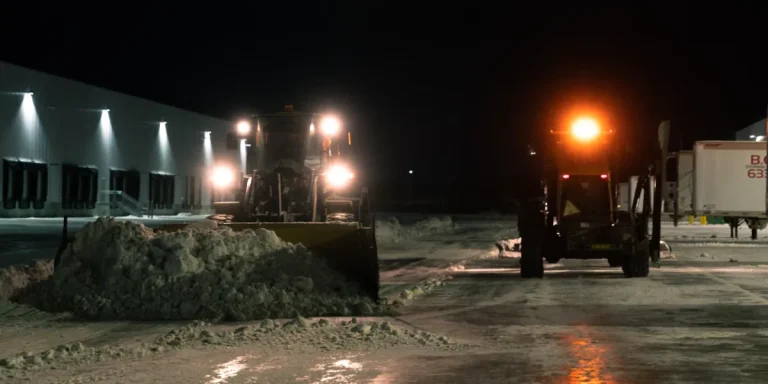
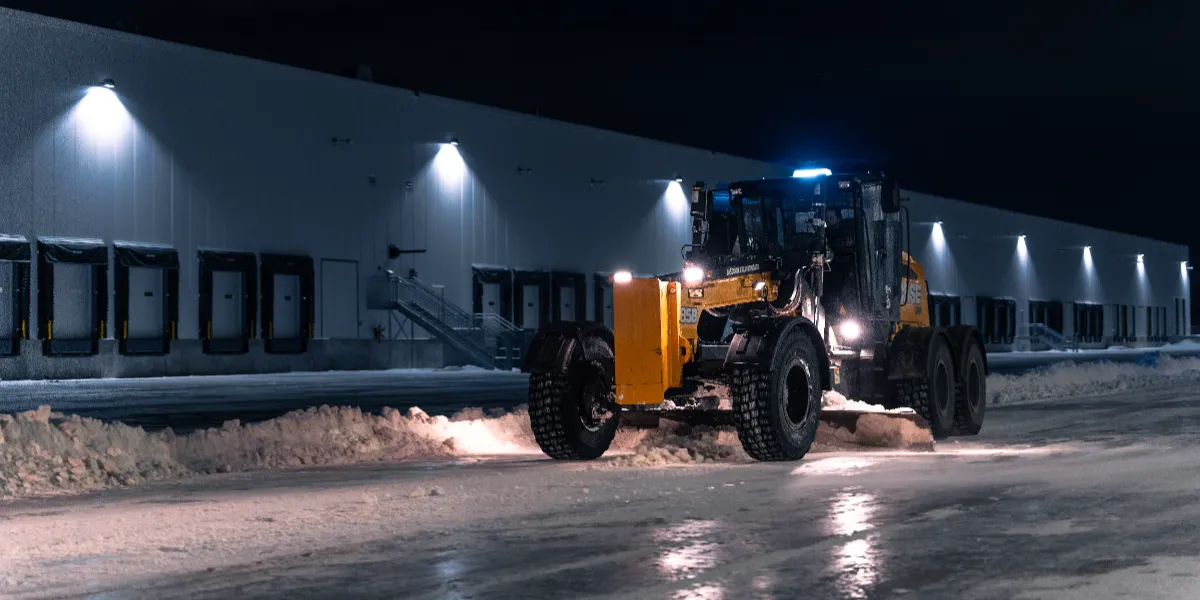
- Graters for very large areas
- Skid steers for tighter or detailed areas
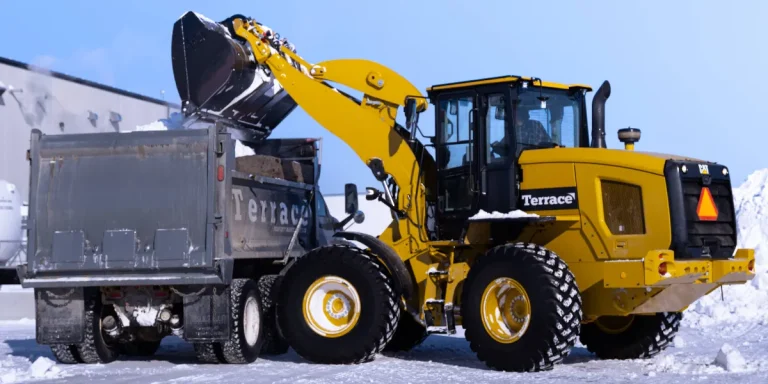
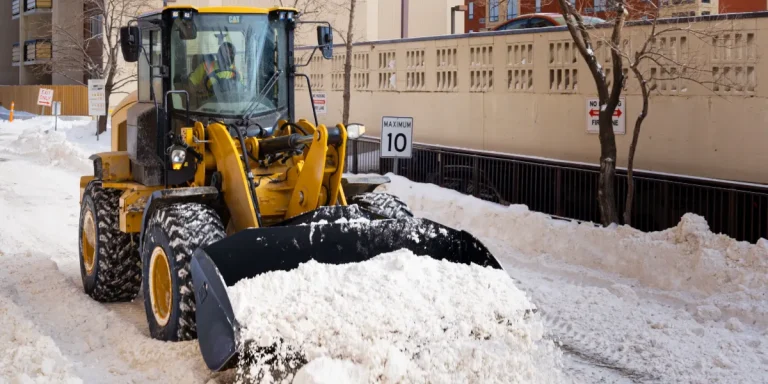
- Loaders for high-volume snow
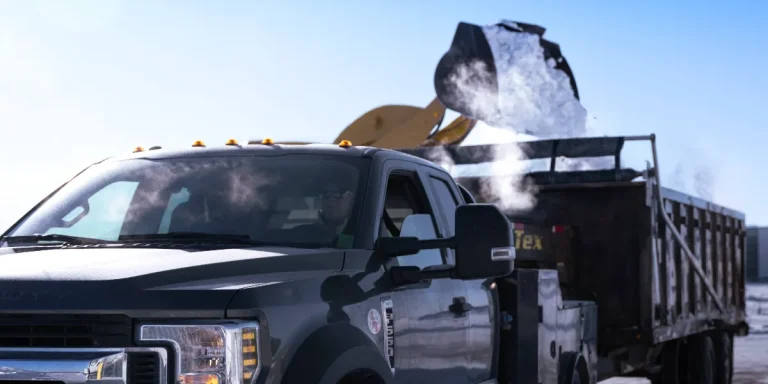
- Large capacity dump trailers for snow haul and removal
Having the right equipment ensures snow can be managed consistently, even during back-to-back storms.
What Industrial Customers Ask Us About Winter Planning
Over the years, our industrial customers ask many of the same questions when preparing for winter, including:
-
- How often should the site be serviced during heavy snowfall?
- How do we keep truck routes usable all season?
- When should we plan for snow hauling?
- How do we avoid emergency disruptions mid-winter?
These questions all point back to one thing: planning ahead matters more than reacting later.
Planning Ahead vs Reacting Mid-Season
In our experience, industrial sites that plan early experience fewer disruptions and fewer urgent issues during the winter.
Waiting until access is restricted limits options and increases pressure. Proactive planning allows snow removal, hauling, and equipment deployment to happen efficiently instead of urgently.
Industrial snow removal works best when it supports operations, not when it’s forced to catch up after problems appear.
Industrial Snow Removal Built Around Planning
Repeated snowfall is a reality of Winnipeg winters. Industrial sites that stay operational through the season are the ones that plan for cumulative snow, not just individual storms.
Terrace Snow Removal works with industrial facilities, warehouses, shipping centres, and yard-based operations to build snow management plans that keep access routes, loading areas, and work zones clear throughout the winter.
If your site depends on safe, reliable access for heavy vehicles and daily operations, planning for repeated snowfall is essential.