
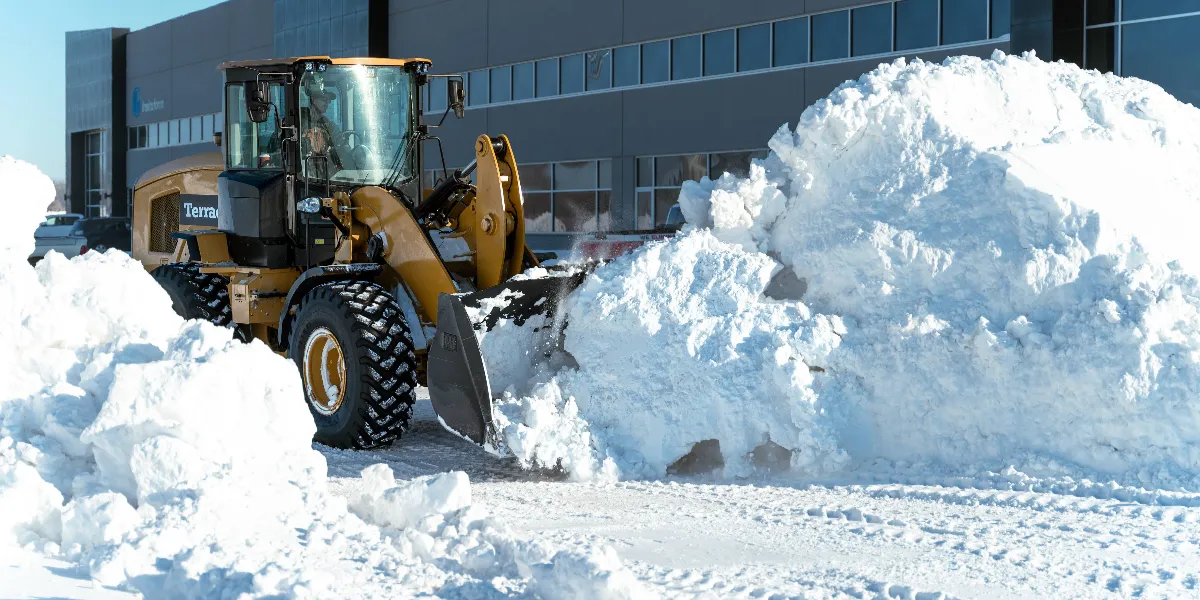
Why Mid-Season Snow Storage Becomes a Problem for Commercial Properties in Winnipeg
At the beginning of winter, snow storage rarely feels like a concern. Early storms are manageable, piles stay contained, and most commercial properties operate as usual. In our experience, the real issues don’t show up in December. They show up mid-season, when snow has been accumulating for weeks and space quietly starts disappearing.
In a city like Winnipeg, where winter brings repeated snowfall over several months, snow storage is not a one-time decision. It’s an ongoing challenge that affects parking availability, access, and safety long before spring arrives.
How Snow Storage Works at the Start of Winter
Most commercial properties begin the season relying on designated snow pile areas. Snow is pushed to the edges of parking lots, along curbs, or into areas that don’t interfere with daily operations.
Early in the season, this approach usually works well. Snow piles are small, visibility remains clear, and parking capacity isn’t noticeably affected. Our commercial customers often tell us that everything feels under control at this stage.
Why Snow Piling Stops Working Mid-Season
As winter progresses, snowfall becomes cumulative. Snow piles don’t reset between storms, they grow larger and denser.
In our experience, this is when storage capacity disappears quickly. Freeze-thaw cycles compact snow, piles harden, and pushing snow farther becomes more difficult. What started as a manageable pile begins to spread into usable space.
Our commercial customers say this is when issues become noticeable, even if no single storm seemed extreme.
How Snow Storage Impacts Parking Availability
One of the most common mid-season problems is lost parking.
Snow piles often take up:
-
- Entire parking stalls
- Portions of driving lanes
- End rows that were never meant for long-term storage
In our experience, this can significantly reduce usable parking, especially on properties that rely on full or near-full capacity. Customers, employees, and tenants begin competing for limited space, leading to frustration and complaints.
Even properties with ample parking can feel the impact once snow piles interfere with traffic flow and visibility.
Full Parking Lots vs Lower-Use Lots: Why Both Are Affected
Our commercial customers often assume snow storage is only a problem for busy properties. In reality, both full and lower-use parking lots are affected, just in different ways.
For full-capacity lots, lost parking stalls are felt immediately. For lower-use lots, the issue is often safety and access. Snow piles can:
-
- Narrow driving lanes
- Block sightlines at entrances and exits
- Encroach on sidewalks and walkways
In our experience, these issues create operational and liability concerns regardless of how full the lot typically is.
How Often Should Commercial Snow Be Removed?
One of the most common questions our commercial customers ask is how often snow should be removed from their property.
Early in the season, storm-based plowing may be enough. As snow storage fills up, frequency becomes more important. Snow removal shifts from simply clearing snow to actively managing snow volume.
In our experience, mid-season is when many properties benefit from reassessing how often snow is removed and whether piling alone is still practical.
Safety and Access Issues Caused by Excess Snow Storage
As snow piles grow, safety concerns increase.
Excess snow storage can lead to:
-
- Blocked sightlines for drivers
- Narrowed access lanes
- Snow encroaching on pedestrian routes
- Increased ice buildup near piles
Our commercial customers say these issues often develop gradually, making them easy to overlook until they become disruptive.
Why Clear-and-Haul Becomes the Practical Solution
When snow storage space runs out, clear-and-haul snow removal becomes the practical next step.
Clear-and-haul removes accumulated snow from the property entirely, restoring parking, access, and visibility. In our experience, this is most commonly needed mid-to-late winter, once piling is no longer effective.
This is a topic we also explore in our Learning Center article on when parking lots require clear-and-haul snow removal, which many property managers reference when planning mid-season service.
Why Waiting Too Long Makes the Problem Worse
Delaying action often makes mid-season snow storage problems harder to solve.
Snow piles become larger and more compacted over time, making them more difficult to relocate or remove. Our commercial customers often tell us they wish they had addressed storage issues earlier, before access and parking were affected.
In our experience, proactive planning reduces disruption and keeps properties usable throughout the winter.
Commercial Snow Storage Challenges in Winnipeg
Winnipeg’s winter conditions make mid-season snow storage challenges common. Snowfall arrives in repeated events, temperatures fluctuate, and snow piles rarely melt away once winter is underway.
This combination means commercial properties need to think beyond early-season piling and plan for cumulative snowfall over the entire winter.
Areas We Support for Commercial Snow Removal and Hauling
We work with commercial properties across Winnipeg and surrounding areas, including:
-
- Winnipeg
- Garden City
- River East
- East St. Paul
- North Kildonan
- East Kildonan
- West Kildonan
- The Maples
- Rossmere
- Transcona
Our experience across these areas gives us a clear understanding of how mid-season snow storage affects different types of commercial properties.
Managing Snow Storage Before It Becomes a Problem
In our experience, the most effective way to manage mid-season snow storage is to plan for it before space runs out. Understanding how snow accumulates over time allows commercial property owners and managers to avoid last-minute disruptions.
Terrace Snow Removal works with commercial properties to assess snow storage capacity and determine when additional solutions, such as clear-and-haul, may be needed to keep sites safe and accessible throughout the winter.